

Your Creative Signature Is Built With Someone Else
Why the image-makers you admire almost all climbed with a long-term creative partner, and how to find yours now
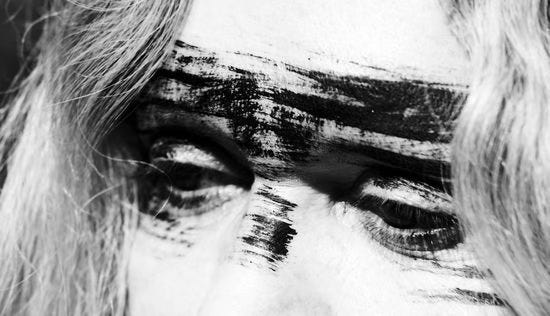
The strongest creative partnerships in fashion image-making almost always start the same way. Two people who are nobody yet recognise something in each other's eye, and they decide to keep working together from there. Years pass. Both careers grow. The partnership grows with them. By the time the industry catches up, the work is inseparable from the relationship that made it.
Corinne Day, Melanie Ward and Kate Moss met when none of them had anything and together made the work that defined the 1990s. Inez van Lamsweerde and Vinoodh Matadin met at the Rietveld Academy in Amsterdam in the early 1980s and have shot as a single working unit ever since. Marc Ascoli was a young art director when he first commissioned an unknown Nick Knight for Yohji Yamamoto in the late 1980s, and together they reset what a fashion catalogue could look like. Martin Margiela and Inge Grognard met at the Royal Academy in Antwerp and she has done the make-up on every Margiela show and image since the first collection in 1988. Marc Jacobs and Katie Grand met when she was a young editor at Dazed and he was still finding his audience, and two decades later they were running every Louis Vuitton campaign together. Pat McGrath and Edward Enninful began working together in early-1990s London when McGrath was a self-taught make-up artist and Enninful was the teenage fashion director at i-D, and both of them now sit at the top of the industry.
The pattern is too consistent to be coincidence. The image-makers and designers we still talk about almost never built their careers alone, and they almost never built them with people who were already famous. They built them with someone they found at the same stage they were at. The same person, sometimes more than one, but always a sustained working relationship forged before either party had anything to offer beyond their eye and their time.
The industry's preferred story is the singular auteur with the singular vision. The photographer with the unmistakable hand. The designer who reinvents the house. The stylist who walks in and makes the look. But if you read the interviews with the people we treat as canonical, almost none of them describe their work that way. They name their collaborators. Often the same ones they met before anyone knew either of their names.
That gap, between how the work is actually built and how the work is talked about, is the most under-discussed dynamic in fashion image-making. The person you will be making your defining work with in ten years is probably someone you could be working with right now, while both of you are still building.
We are working through a moment in which image production has become functionally infinite. AI generates a technically polished visual from a prompt in seconds. Social platforms reward the images that already resemble what already worked. Competent execution is the floor. What stands out is a recognisable hand. A point of view. A signature.
Signatures are rarely something you build alone. The way the canon actually works is that image-makers and designers find one or two people whose taste is in real alignment with theirs, and then they make work together over years until the work has a name. Corinne Day and Melanie Ward did this. Rafael Pavarotti and Ib Kamara are doing it now. The signature belongs to both of them.
Corinne Day and Melanie Ward are worth slowing down on. What they did together is impossible to attribute to either one of them. The famous ‘The 3rd Summer of Love’ editorial for The Face, July 1990, with Kate Moss on Camber Sands. Corinne Day shot it. Melanie Ward styled it. The image broke from the polished glamour of 1980s fashion photography because they wanted it to, together. Day’s photographs hold the moment, but Ward’s casting and styling produced what Day was photographing. They went on to shoot for British, American and Italian Vogue, mostly together. Corinne Day’s career was cut short by illness and she died in 2010. Ward went on to a forty-year career working with Helmut Lang and Calvin Klein, the visual codes of which were shaped by what she had developed with Corinne at the start. The signature was joint.


Rafael Pavarotti and Ib Kamara are the contemporary version of the same story. Kamara was a young stylist working in London. Pavarotti was a young photographer working out of Brazil. They first connected on Instagram in 2018, after Kamara saw a Vogue Brasil editorial Pavarotti had shot the year before. Kamara flew to Belém shortly after, and they made their first body of work together there, photographing Pavarotti's family and community. Their early editorials ran in i-D and Double, drawing directly on their respective backgrounds in Sierra Leone and the Amazon. Kamara went on to become Editor-in-Chief of Dazed in 2021, then Art and Image Director at Off-White in 2022, succeeding Virgil Abloh after his death. Pavarotti now shoots major campaigns for Dior, Maison Margiela, Balmain and Ferragamo, and has photographed multiple Vogue covers including Beyoncé's July 2022 British Vogue cover. They climbed together. Neither name would be where it is without the other.
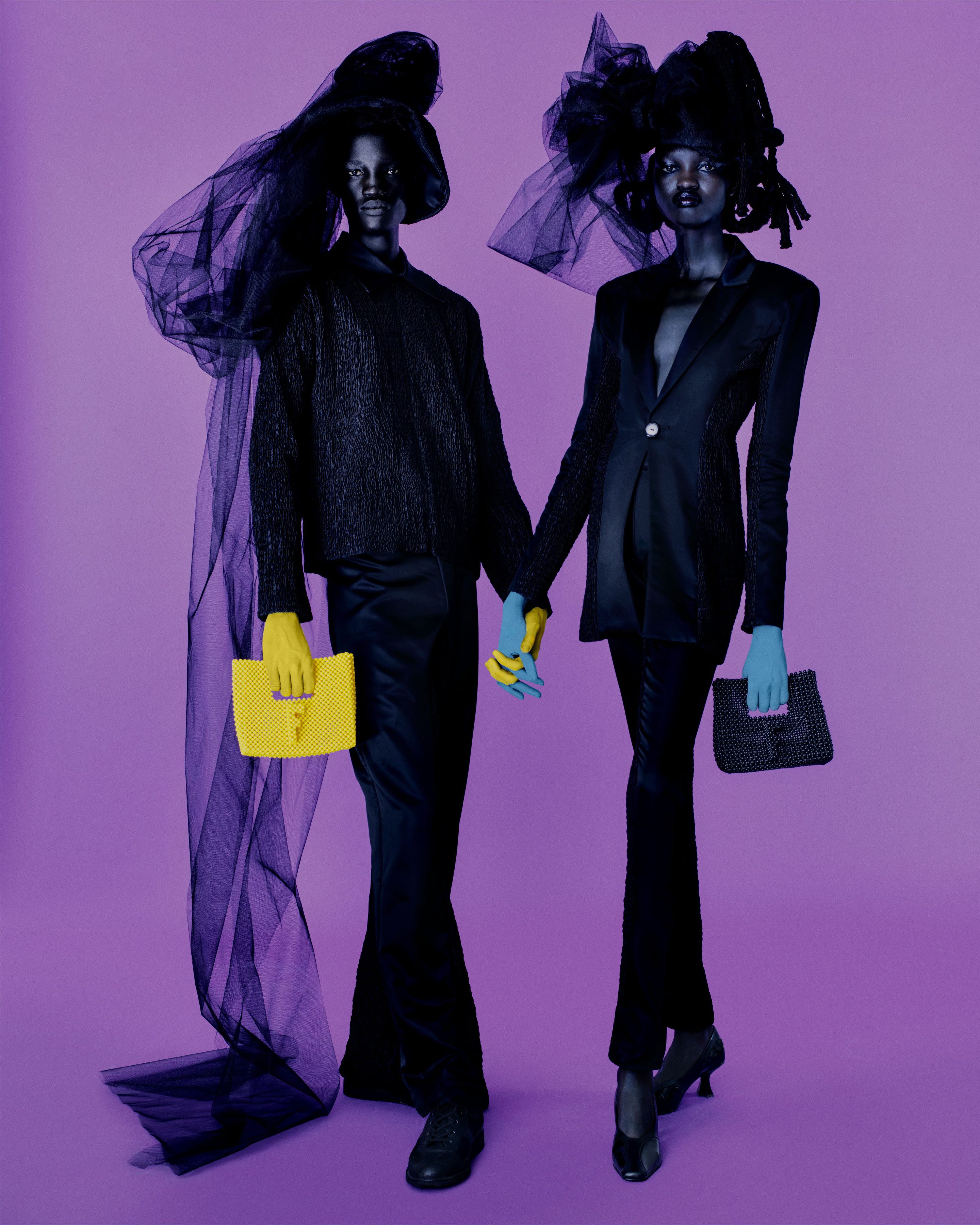
The pattern repeats. Nick Knight and Simon Foxton, working together at i-D since the late 1980s. Mert Alas and Marcus Piggott, who met in London in the late 1990s and have shot as a unit ever since. Dries Van Noten and Patrick Vangheluwe, life partners and business partners across four decades. The pattern keeps repeating because the partnership is the mechanism.
Upgrade if you want to read the next of this post, my structural frameworks and in-depth posts are for paid subscribers.
The four longer-running partnerships I think are most worth studying in detail, and what each one teaches about durability over time. Then the practical playbook I have been building in my own practice. How to identify the right working partner from existing taste signals rather than status. How to make first contact in a way that actually gets read. How to structure a first project as a chemistry test. How to escalate from there up the editorial ladder. And how to pitch collaborators into commercial work alongside editorial so the partnership earns its own sustainability over years.
A paid subscription to Art Direction also includes:
First access to the Strategic Art Direction Program, launching this week. The full method I use to develop a creative practice with a recognisable point of view.
The Visual Curriculum. An ongoing class room/program where we dive deep into image literacy and visual culture.
The Art Director’s DNA Program. The deeper diagnostic for identifying your own visual signature and where it is actually pointing.
The full archive. Over 250 posts with analysis, inspiration and working frameworks across art direction, image history and visual culture.
Email outreach templates. The exact language I use to open conversations with photographers, editors, agents and brands.
Weekly essays on art direction, image-making and where the industry is moving.
