

Instinct Needs Structure to Become a Creative Practice
Why taste on its own stalls, and what turns a way of seeing into actual work
Taste is the thing people think they need, and it is the thing that, on its own, will quietly let you down. I have watched truly gifted people stall for years, not because their eye was weak but because their eye was the only part of them doing any work. Instinct gets you to the edge of a practice and all the ideas. It is structure that takes you across, and structure is the part almost nobody finds attractive enough to talk about.
Upgrade to paid to read about:
- Why the gap between your taste and your ability is a stage rather than a verdict, and the only thing that actually closes it.
- The paradox every strong brief runs on, and why constraint produces freedom instead of limiting it.
- What the research on flow reveals about why the effortless state only arrives on the far side of structure
- The three structures that hold a practice together, the research system, the repeatable process, and the feedback loop almost everyone skips
But also paid subscribers get access to my 8-month Visual Curriculum, a detailed theory-first program to learn about visual culture, the 30-days Art Director’s DNA, an entire archive of 250+ posts with analysis, career insights and inspiration, from Idea to Issue program and the Art Director’s Email playbook.
The gap between your taste and your ability
Ira Glass (author amongst many things) described the problem better than anyone in a short interview that has circulated for years. When you start out, he said, your taste is already excellent, which is why you got into this in the first place. The trouble is that your ability has not caught up to your taste yet, so everything you make disappoints you, and a lot of people quit in that gap because they assume the disappointment means they lack talent. The only way through is volume. You close the gap by making a large amount of work, most of it not good, until your ability finally rises to meet the standard your eye set on day one. Taste sets the target. Only repetition reaches it. The disappointment is never a verdict, but should be seen as a stage. This is a ‘philosophy’ I live by, I create a lot of work that I never share. I recently talked about this on a very exciting podcast (I don’t know when it will come out, but will share when it does). I used to feel the pressure of staying present online by sharing new work, now I like to have months where I lock in to simply create. I love to make stuff!
Twyla Tharp built an entire book around the next part of this, The Creative Habit, and the title is the argument. She is one of the most inventive choreographers alive, and her central claim is that creativity is not a lightning strike you wait for. It is the product of routine, ritual and preparation, the same unglamorous scaffolding every single day, which is precisely what frees the inspired moment to arrive. The romance says the artist waits for the muse. Tharp’s working life says the artist builds a structure so reliable that the muse has no choice but to turn up to work.
Constraint is what produces freedom
There is a deeper paradox here. Constraint, the deliberate narrowing of your options, is what produces freedom rather than limiting it. Faced with infinite choice, you freeze. Give yourself a frame, a rule, a fixed set of limits, and suddenly you can move, because the energy that was spent deciding what is even possible can now go into the work itself. This is why a tight brief often produces stronger work than an open one, and why the people who beg for total creative freedom are sometimes the ones who do the least with it.
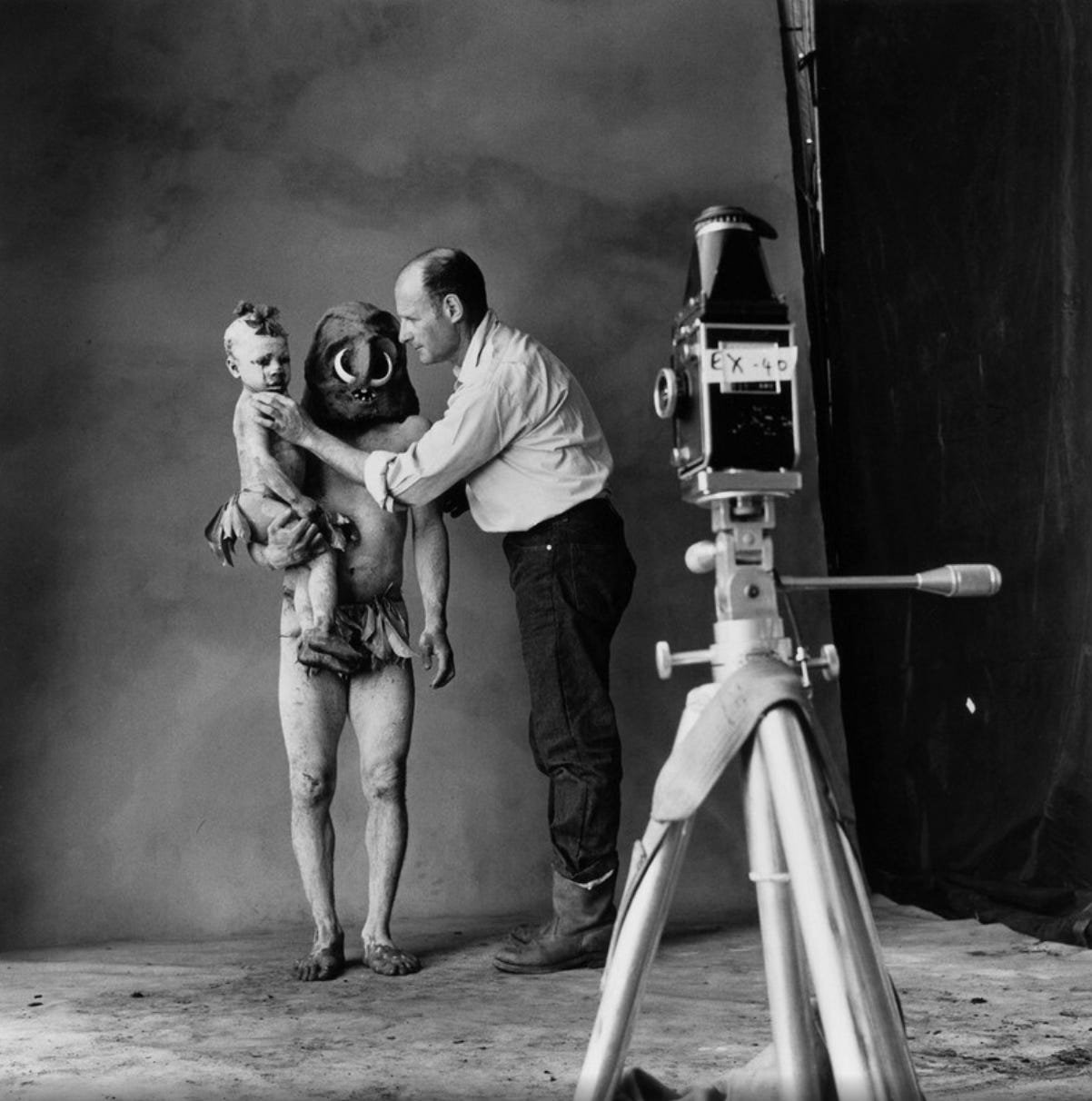
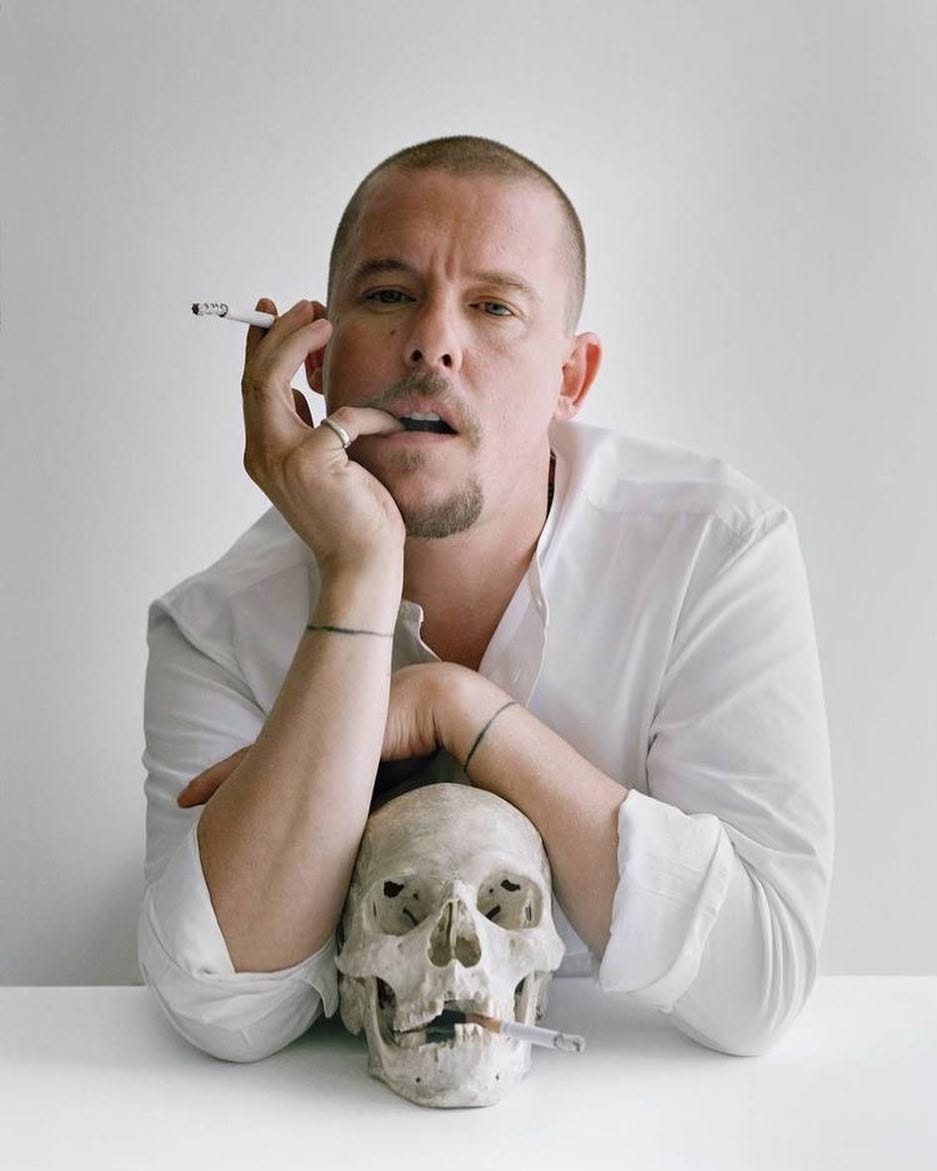
Image history makes the case visible. Irving Penn built some of the most enduring photographs of the twentieth century out of severe, self-imposed constraint. He worked against plain backdrops, in controlled studio light, and for a celebrated series of portraits he literally constructed a tight corner and placed his subjects inside it, forcing a particular kind of revealing discomfort. The limitation was the method. By removing almost every variable, he made the few he kept enormously powerful. His still lifes work the same way, a rigorous system within which the eye is free to do something extraordinary. The control was not the opposite of the art, it was the condition that made the art possible. Tim Walker did something similar, he iliminated his expansive set designs and traded his subjects for a simple white studio while still being able to create a ‘recognisable Tim Walker’ image.
Flow lives on the far side of structure
You can see the same principle in the research on flow, the state of total absorption that Mihaly Csikszentmihalyi spent his career studying. Flow does not arrive in chaos. It requires a clear goal, immediate feedback and a balance between challenge and skill, which is to say it requires structure. The effortless feeling of being lost in good work is only available on the far side of a great deal of deliberate, structured effort. The ease is earned by the system, and not by the talent.
This runs against the current mood, which fetishises spontaneity and treats process as something to hide or gatekeep, or even the other side of culture is the idea of building in public while growing a following, which to me can sometimes seem counterintuitive because content creation takes a lot of time. The most useful thing you can do as the tools get faster and the pressure to produce constant content rises is to build a practice that does not depend on feeling inspired, because inspiration is the least reliable raw material there is. A system you can run on a flat day will outproduce a gift you can only use when the conditions are perfect.
The structures that actually hold a practice
It helps to be concrete about what structure means here, because the word can sound like bureaucracy when it is closer to scaffolding.
The first structure is a research system, a deliberate way of collecting and storing what you find rather than letting references pile up in a thousand unsorted screenshots. A hoard is not an archive. An archive is organised so that you can find the right image at the moment you need it, tagged by feeling or theme, and the act of organising it is itself a way of thinking about what you are drawn to and why. Most people have the hoard. The practice begins when the hoard becomes a system.
The second structure is a process you can repeat, a reliable path from brief to finished image that does not depend on feeling inspired. Mine runs from the written tension to the word web to the interrogated references to the shoot to the grade, and because the steps are fixed, I can start on a flat day and trust the process to carry me into the work. The romance of waiting for inspiration is the enemy of output. A process is what lets you begin before you feel ready, which is the only way anything substantial ever gets made. I created a career for myself where I pretty much need to have ideas all the time, for my art direction projects, for treatments, photo shoots, but also my writing and research projects. I trained my brain well enough to come up with 10 ideas based off of one image, sentence or sentiment.
The third structure is feedback, and it is the one people skip. Anders Ericsson’s research on deliberate practice is clear that repetition without feedback doesnt build skill, it just entrenches your existing habits. So the practice has to include a way of seeing your work clearly, whether that is a trusted eye who will tell you the truth, a habit of revisiting old work with distance, or the simple discipline of comparing what you intended with what you got. Taste improves fastest when it is held against reality often, and structure is what builds that comparison into the work rather than leaving it to chance.
So if you have the eye but the work keeps stalling, stop looking for more inspiration and start building more structure. Set constraints before you begin, a palette, a format, a single question the work has to answer. Sometimes simply decicing the fact you want to make a 5 minute short film in which rock music is the hero already brings the greatest ideas, because everything you come up with needs to answer this question. Make a routine you can keep on the days you do not feel like it, because those are the days that actually move you. Produce more than feels comfortable, knowing most of it will not be good, because the volume is the only thing that closes the gap between what you can see and what you can make. Taste and talent are the gift, but structure is what turns the gift into a practice, and a practice is the only thing that lasts.
Love,
Zoë
